Rarities, tiers, fusion and gems
Every item carries one of seven rarities — Common, Uncommon, Rare, Epic, Legendary, Mythic, Divine — and one of seven tiers. Rarity Upgrade eats duplicates of the same type and rarity to climb a step, Fusion averages nine items into one, Tier Upgrade costs iron and coins with a success chance, and gems socket into whatever the rarity allows.
Gear in Task Bar Cube is a two-dimensional ladder: a rarity from Common to Divine, and a tier from 1 to 7 on the same item. Different panels move each axis, with different currencies and different failure modes, and the most common early mistake is treating them as one number.
The two axes
| Axis | Range | Moved by | Costs | Can fail? |
|---|---|---|---|---|
| Rarity | Common → Divine, 7 steps | Rarity Upgrade, Fusion | Duplicate items | No (Rarity Upgrade is fixed) |
| Tier | 1 → 7 per item | Tier Upgrade | Iron, gold and platinum coins | Yes, and coins are kept on failure |
Tier and rarity are independent: a Common-tier-7 item and a Divine-tier-1 item are both legal, and neither is automatically better. The item card shows both, next to the three stat lines most items carry — Attack Power, Crit Chance and Crit Damage.
The rarity names are the ones the Rarity Upgrade panel uses, in order: Common, Uncommon, Rare, Epic, Legendary, Mythic, Divine. ## Rarity Upgrade: the duplicate sink
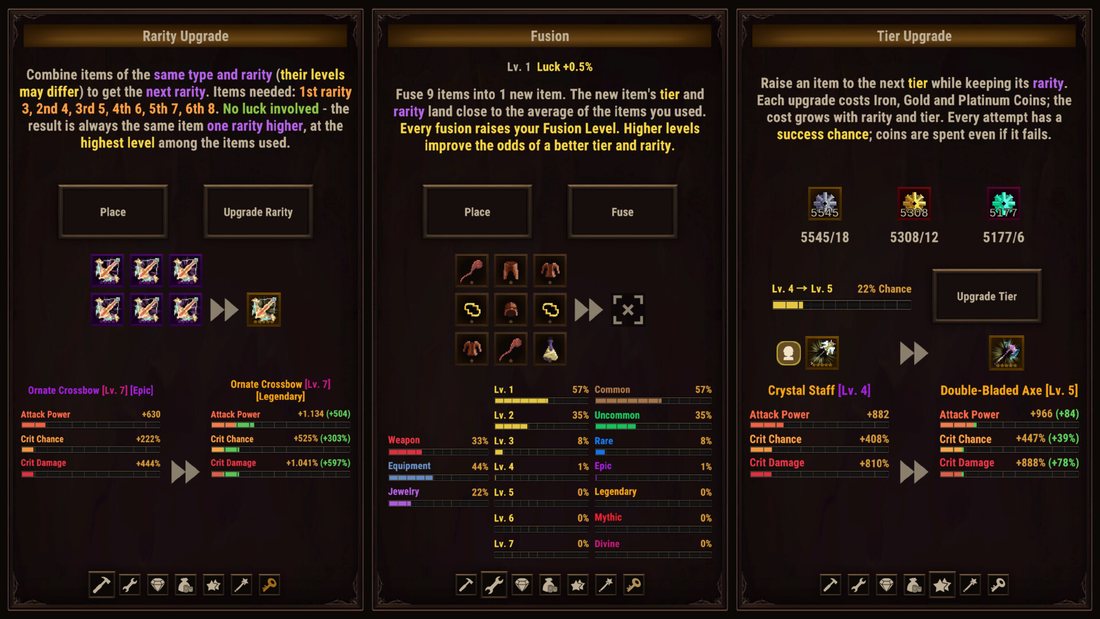
This is the panel people under-use, because it does not look exciting. It combines items of the same type and rarity — their levels do not have to match — into one item of the next rarity up.
Three details make it predictable:
- It is deterministic. The panel says outright that there is no luck involved here. You are not rolling; you are paying a fixed number of duplicates for a step.
- The count climbs with the rarity you are feeding. The requirement list runs from three items at the start of the ladder up to eight by the sixth step. Feeding a Common-upgrade is cheap; feeding a Legendary-upgrade is a project.
- The result keeps the best input level. You get the same item one rarity higher, at the highest level among the items you used, so it is worth checking which copy in the stack is highest before you commit.
Because the ladder is deterministic, keep every duplicate you are not wearing: ten Rare duplicates are not clutter, they are one Epic item with a known price.
Fusion: the average, with a Fusion level on top
Fusion is the second, different door. It takes nine items and returns one new item, and the result lands close to the average of what you fed in — both in tier and in rarity. It is not a rarity ladder step, it is a reroll with a floor.
Fusion also has its own progression: every fuse raises your Fusion Level, and higher Fusion levels improve the odds of a better tier and a better rarity landing. The panel prints a Luck value next to the level, and lists the odds attached to each level underneath it.
The difference between the two panels:
| Rarity Upgrade | Fusion | |
|---|---|---|
| Input | Same type and rarity, 3 → 8 items | Nine items, mixed |
| Output | Fixed: one rarity higher, best input level | Averaged tier and rarity, adjusted by odds |
| Luck involved | None | Yes, improved by Fusion Level |
| Good for | Pushing a specific item you like | Turning mixed junk into something usable |
Early on, Rarity Upgrade is the better deal because it is a guaranteed step. Fusion becomes the right answer when your inventory is full of items that do not stack into any single upgrade — nine mediocre things that together beat nothing.
Tier Upgrade: the coin sink with a failure chance
Tier Upgrade raises an item one tier and keeps its rarity. It is the panel that punishes impatience, for three stated reasons:
- It costs three currencies. Iron coins, gold coins and platinum coins, all at once.
- The cost grows with both rarity and tier. A Common item at tier 1 is cheap; a Divine item at tier 6 is not.
- Every attempt has a success chance, and the coins are spent even if it fails.
That third rule is the one to internalise. Tier Upgrade is the only gear action in the game that can take your resources and give nothing back, so it should be the last thing you do in a session, not the first. Spending coins on a failed tier attempt at the start of an evening means the rest of the evening is played without those coins.
Do not upgrade tiers on an item you are about to replace by rarity, because tier work does not transfer, and do not chase the last tier on a mid-rarity item.
Gem Socketing: the third lever
Gems are the only way to add stats to an item that are not part of its base roll. The panel's own description is short: socket gems into your items to make them stronger, each item opens sockets based on its rarity, and every gem adds its own stat to the item.
| What you need to know | Detail |
|---|---|
| How many sockets | Set by the item's rarity, not its tier |
| What gems add | Their own stat line, on top of the item's |
| Where gems come from | Drops and the gathering panels |
A high-rarity item with empty sockets is wasted potential, and a low-rarity item with good gems can genuinely outperform the flashier item next to it.
Selling gear
The sale panel is blunt: sell your items for gold, sold items are gone for good, and the higher the tier and rarity, the more you earn. That means sale price scales with exactly the two things you spent effort raising — which sounds like a reward and is actually a trap, because you are paid for the item's potential, not its value to your team.
- Never sell an upgrade. If it beats what a hero is wearing, wear it.
- Prefer Rarity Upgrade over selling duplicates unless you are genuinely blocked on gold.
Where selling is right: items for classes you do not run, items whose stat lines are dead weight for your team, and duplicates in the seventh rarity — at that point the ladder has nowhere to go, and gold is the only output left.
A gear routine that does not waste resources
- Empty the chest into inventory, never sell from the chest window.
- Sort by type and equip anything that beats a worn item on the three stat lines.
- Stack duplicates by type and rarity against the Rarity Upgrade requirement list.
- Push one item at a time up the ladder. One Legendary beats four half-built Epics.
- Socket the gems you have into the item you are wearing.
- Only then spend coins on tier upgrades, and only on items that survived step 4.
That order exists because the panels have different cost structures: duplicates are near-free and deterministic, gems are found, and coins are the only resource you can burn for nothing.